

How Montessori Nurtures Curiosity in Young Children
Over the coming months, we’re exploring six qualities we intentionally nurture every day in our classrooms because we believe they shape not only successful learners, but kind, capable, and resilient people. Each month, we take a closer look at one of these qualities and why it matters far beyond the early years.
Last month, we explored confidence and how children develop a quiet trust in their own ability to learn through experience. This month, we’re turning our attention to a quality that lies at the heart of learning itself: curiosity.
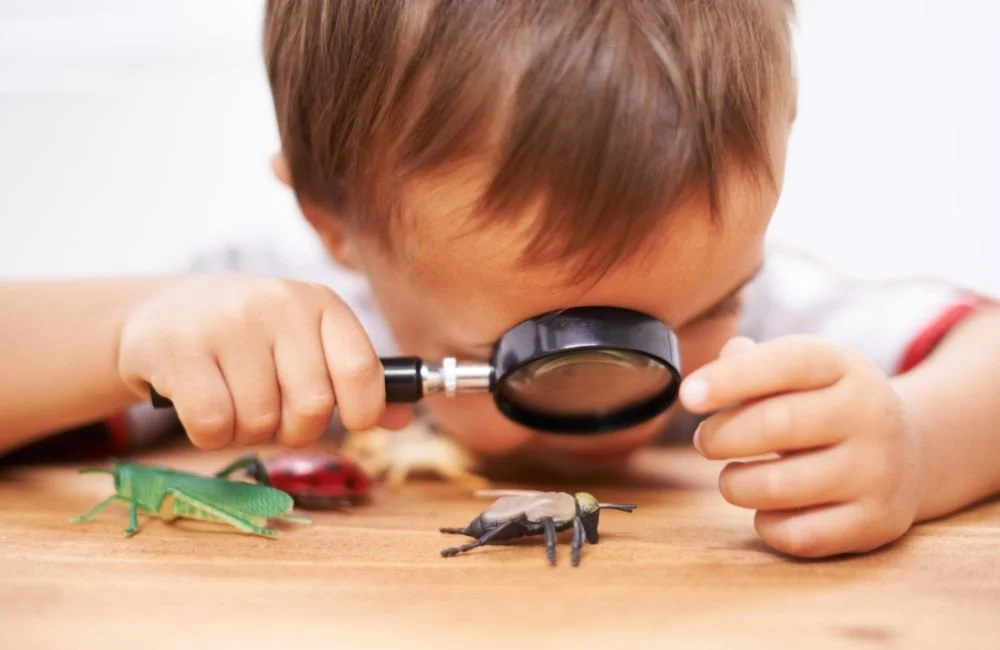
Young children are naturally curious. They ask questions, examine tiny details, and find wonder in places adults often overlook. But curiosity is more than a phase of childhood or a long list of “whys.” It is a way of engaging with the world—one that shapes not only what children learn, but how they learn.
The challenge, then, isn’t teaching children to be curious. It is preserving the curiosity they already possess.
What Is Curiosity?
We often think curiosity begins with a question.
In reality, it begins a little earlier.
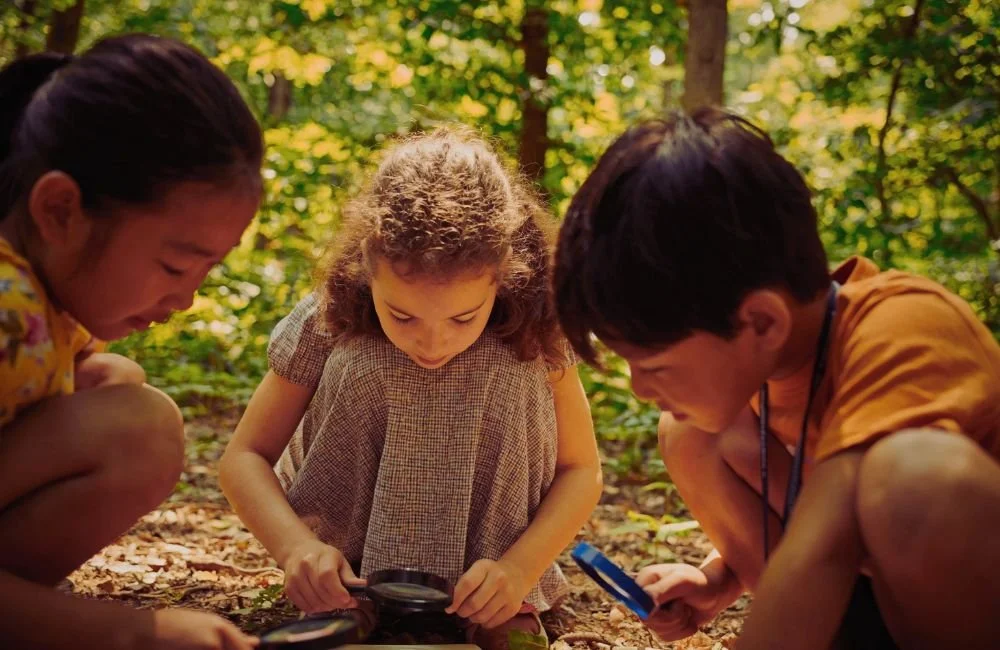
It begins when something catches a child’s attention and they decide it’s worth a closer look. Before they ask “Why?” or “How?” they have already noticed something others may have walked past. They pause. They observe. They wonder.
That moment matters.
Curiosity is not simply the desire to collect information. It is the desire to make sense of the world. It invites children to look more carefully, notice patterns, test ideas, and connect one discovery to the next.
Perhaps this is why curiosity is such a powerful foundation for learning. Facts can be taught, but the desire to understand must come from within. When children are genuinely curious, learning becomes something they actively participate in rather than something they simply receive.
Why Curiosity Matters
Curiosity changes the relationship children have with knowledge.
When children are curious, they aren’t trying to find the right answer simply because an adult has asked the question. They are searching for answers because the question belongs to them.
That difference is significant.
Children are far more likely to remember something they have discovered than something they have simply been told. More importantly, they begin to see themselves as active participants in learning rather than passive recipients of information.
Curiosity also teaches children to become comfortable with not knowing.
In many ways, this is one of the most valuable habits a learner can develop. Instead of viewing uncertainty as something to avoid, curious children begin to see it as an invitation to investigate. They learn that not having the answer is not a problem to solve immediately, but an opportunity to observe more closely, ask another question, or try a different approach.
Over time, this shapes far more than academic learning. It nurtures children who are thoughtful, observant, open-minded, and willing to explore ideas that are unfamiliar. They learn to approach the world with interest rather than assumption.
Supporting Curiosity at Home
One of the greatest ways to nurture curiosity is simply to make room for it.
Rather than rushing to answer every question, try wondering alongside your child. Respond with, “What do you think?” or, “How could we find out?” These conversations encourage children to think for themselves while showing them that learning is something we do together.
Follow your child’s interests, even when they seem ordinary. A fascination with birds, baking, shadows, insects, or construction vehicles can become the starting point for meaningful conversations and discoveries. Children often learn most deeply when they are exploring something they genuinely care about.
Allow time for unhurried exploration. Not every walk needs a destination, and not every afternoon needs to be filled with planned activities. Curiosity often grows in the quiet spaces where children have the freedom to notice, imagine, experiment, and simply pay attention.
Finally, let your child see your own curiosity. Wonder aloud. Admit when you don’t know something. Look things up together. When children see adults continuing to ask questions, they learn that curiosity isn’t something we outgrow—it’s something we carry with us.
Growing a Lifelong Love of Wonder
Curiosity is often described as the beginning of learning, but perhaps it is something even more enduring.
One afternoon, as the class prepared to come inside, a child paused beside a tiny snail making its way across the playground after the rain. Soon another child stopped. Then another. For several quiet minutes, no one hurried them along. They watched. They wondered where it was going. They noticed the pattern on its shell, the trail it left behind, and how slowly it moved compared to everything else around them.
Nothing extraordinary had happened.
The snail had been there all along.
What changed was that someone took the time to notice.
Perhaps that is the deeper purpose of nurturing curiosity in the early years. It is not simply to help children ask more questions or learn more facts. It is to help them move through the world with open eyes—to remain interested in what they do not yet understand and to discover that there is always something worth noticing.
At Orange Seeds Montessori, we hope every child leaves with knowledge, certainly. But even more than that, we hope they leave with the habit of wondering, because a child who continues to notice the world is a child who never truly stops learning.